
Former Watson Fellow and social entrepreneur Srikar Gullapalli talks about the issues affecting India's growth and tells us why he wants more people to actively participate in building a bright future and put India on the global map.
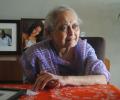
Sheela Bhatt meets Bharti Patel, a truly exceptional mother of our times whose son Dr Vikram Patel was recently ranked among Time magazine's 100 most influential people of 2015, to find out her recipe for a remarkable upbringing.

'People are beaten at the slightest provocation, paraded completely naked and then tortured. Did you know the number of prison deaths is the highest in Maharashtra? The one year I was in jail, 98 prisoners died.' 'The judges did warn the jail authorities, but they didn't care. They even violated the high court's order regarding my treatment. One judge asked my lawyer: "Can I go and implement my orders there?"' Professor G N Saibaba, who is 90 per cent handicapped, speaks of his ordeal in a Nagpur jail after being arrested for protesting against the Centre's anti-Naxal and anti-Adivasi campaign.

Shriya Rangarajan has come a long way from the comforts of the western world.

Dr Kalyani Gomathinayagam, a young Indian doctor who volunteered to spend four weeks in west Africa helping those suffering and dying of Ebola, speaks to Vaihayasi Pande Daniel/Rediff.com why she took on an assignment many would shy away from.

This is the joint statement issued by the ministry of external affairs on the visit of US President Barack Obama to India.

Nidhi Tiwari speaks about her road trip from Delhi to London.

The population in Gaza has, for almost a decade, been facing Israel-created 'blockage' from the rest of the world. The isolation has given rise to tunnel phenomenon, an underground route for the procurement of essentials, says Ajey Lele

This cult of speed reaches its crowning glory during that peculiar Indian spectacle called medical camps. Medical camps are an activity in which doctors from cities travel to underserved areas, often on weekends, where the poor are then herded in hundreds for deliverance, photo-ops and freebies. In their more evolved form, there are surgical camps where bewildered and overawed patients are put onto operating tables and, much like an assembly line, a series of operations are performed in rapid succession. The surgical instruments are often magically sterilised in minutes between procedures, says Dr Sanjay Nagral.
